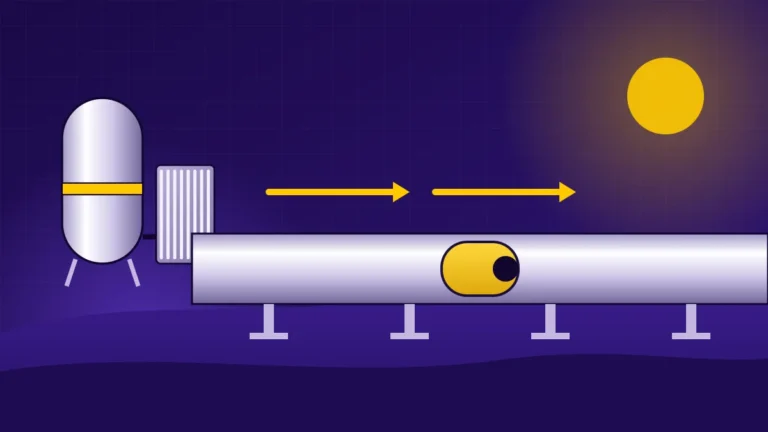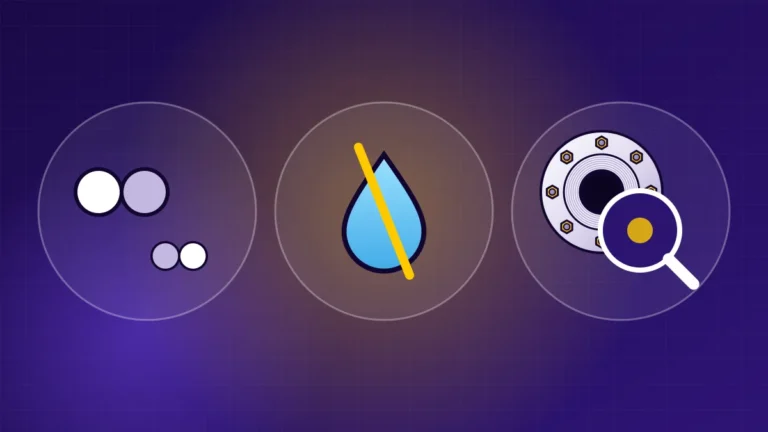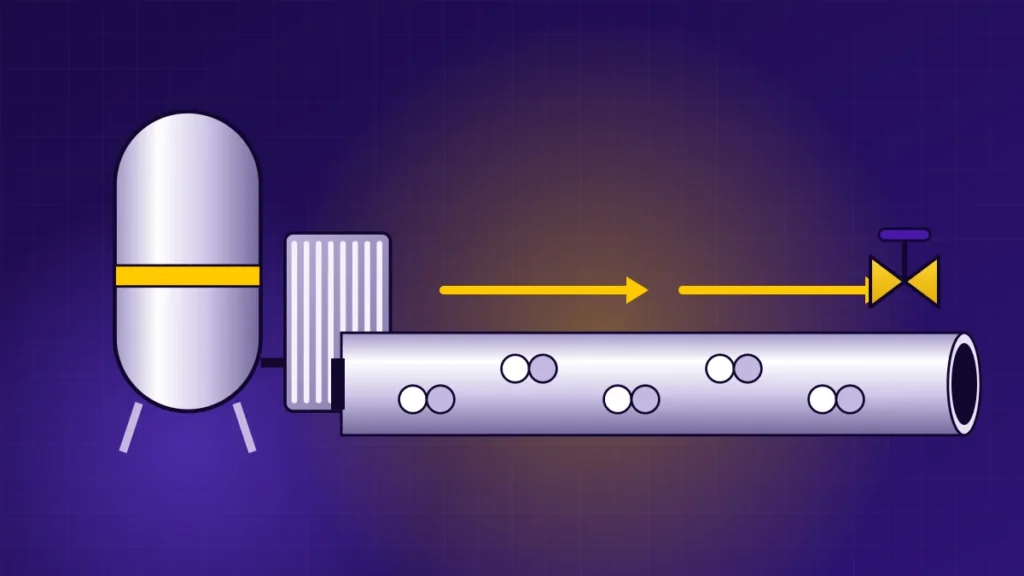
Nitrogen purging replaces the gas inside a pipeline, vessel or process unit with nitrogen. It is done for two main reasons:
- Before start-up, to remove oxygen so hydrocarbons can be introduced without forming a flammable mixture.
- Before opening or maintenance, to remove flammable or toxic gas so the system can be worked on safely.
Nitrogen is used because it is inert, dry and readily available as liquid or gas. This article sets out a typical purging procedure. Your plant’s own procedure always takes priority.
Purging methods
| Method | How it works | Best for |
|---|---|---|
| Displacement (plug flow) | Nitrogen pushes the old gas out like a piston, often behind a pig | Long pipelines |
| Dilution (sweep) | Nitrogen flows through and mixes with the old gas until the concentration falls | Vessels, short lines, complex units |
| Pressure cycling | The system is pressurised with nitrogen, then vented, several times | Dead legs, small systems, equipment with no through-flow |
| Vacuum cycling | The system is evacuated, then filled with nitrogen | Systems rated for vacuum |
Our nitrogen purge volume guide shows how much nitrogen each method needs.
Step 1: Define the target
Agree with the operator what “purged” means. Typical targets are:
- oxygen below a set value before hydrocarbons are introduced, often 1–2% or lower;
- hydrocarbons below a set % LEL before opening;
- dew point, if the system also needs to be dry (see purging vs drying vs leak testing).
Step 2: Plan the purge
- Mark up drawings with nitrogen injection points, vent points and sample points.
- Identify dead legs, bypasses and instrument connections that need separate purging.
- Calculate the nitrogen volume and flow rate.
- Choose the nitrogen supply: liquid nitrogen with vaporiser, membrane units, or cylinder packs for small jobs.
- Check pressure and temperature limits. Vaporised nitrogen must be warmed to a safe temperature before it enters carbon steel equipment, because very cold gas can make steel brittle.
Step 3: Prepare the system
- Isolate the system from other units with valves and blinds.
- Confirm vent routes go to a safe location or flare.
- Install calibrated gauges, flow meters and temperature indicators.
- Set up barriers and signs around vent points.
Step 4: Purge
- Start nitrogen flow at a controlled rate.
- Monitor pressure and temperature at the injection point.
- Open vents in the planned sequence, from nearest to farthest or as the plan sets out.
- Purge dead legs and branches individually.
Step 5: Sample and confirm
- Take gas samples at every vent and sample point with a calibrated oxygen analyser (and LEL or H₂S meter if needed).
- Continue purging until all points meet the target on repeated readings.
- Record each reading with time and location.
Step 6: Hold or hand over
- Close vents and leave the system under a slight positive nitrogen pressure (a “nitrogen blanket”) so air cannot get back in.
- Hand over to operations with the purge record and the final readings.
Safety: nitrogen is an asphyxiant
Nitrogen has no smell or colour and gives no warning. Breathing air with too little oxygen can cause collapse within a few breaths. Key controls:
- Never enter a purged vessel or confined space without a permit, gas testing and breathing apparatus where required.
- Keep vent points away from people and enclosed areas.
- Use personal oxygen monitors near vent points.
- Handle liquid nitrogen with cryogenic gloves, face shields and the right hoses.
Frequently asked questions
Why not purge with air or steam?
Air contains oxygen, which is what you are trying to remove. Steam is used for some cleaning tasks, but it leaves water behind and condenses as it cools.
How long does a purge take?
It depends on the volume, the method and the nitrogen flow rate. Small vessels may take an hour; long pipelines can take days.
Do I need nitrogen purging before cold cutting?
Often, yes. Purging removes flammable vapour before a line is opened. See cutting pipes in hazardous areas.
Our nitrogen purging services cover pipelines, vessels and plants across the Kingdom, including Al Jubail, Ras Al Khair and Riyadh. Contact us to plan a purge.