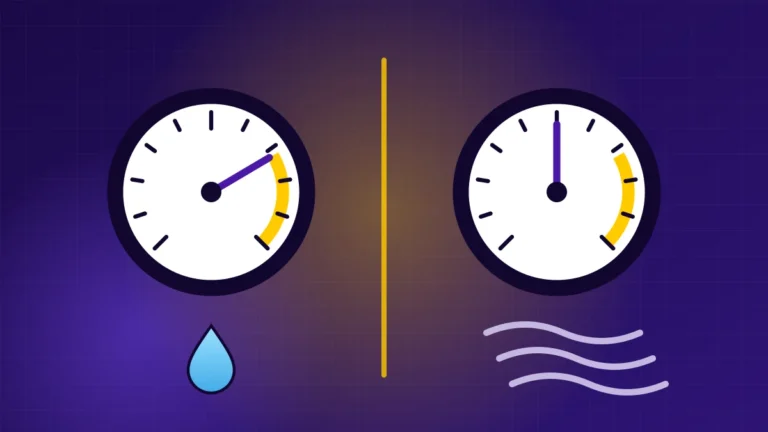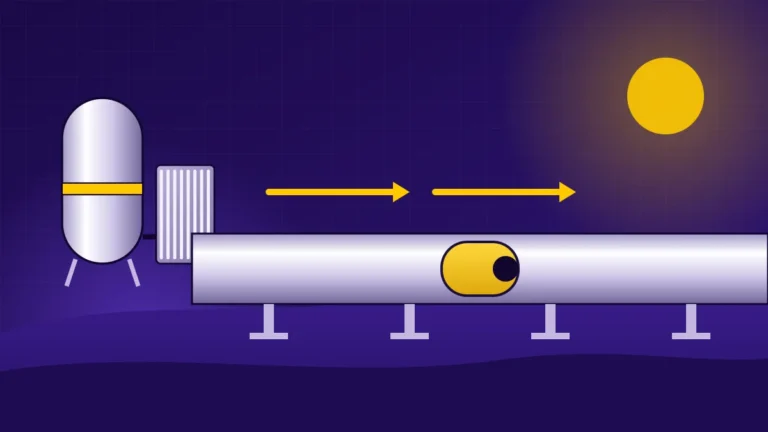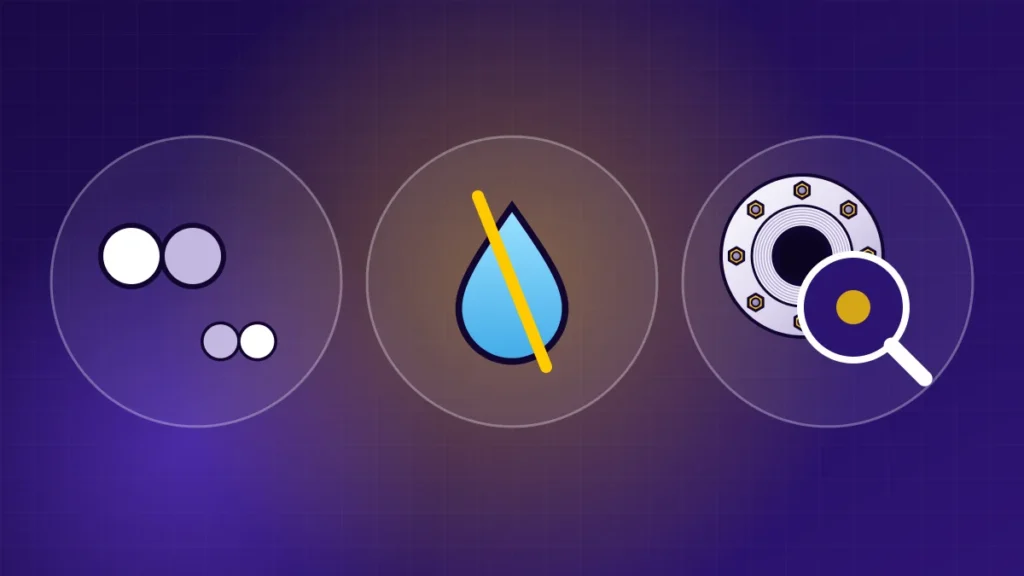
“Nitrogen services” can mean several different things on a project. Three of the most common are purging, drying and leak testing. They use the same gas and often the same equipment, but they have different goals and different acceptance tests. Mixing them up in a scope of work leads to disputes and delays.
Nitrogen purging
Goal: remove oxygen, flammable gas or toxic gas from a system.
Measured by: oxygen % (with an oxygen analyser), % LEL for hydrocarbons, or ppm for toxic gases, at every vent point.
When: before start-up, before opening equipment for maintenance, or before cutting. See our nitrogen purging procedure.
Nitrogen drying
Goal: remove water from a system, usually after a hydrotest.
Measured by: dew point, the temperature at which water would condense from the gas. The lower the dew point, the drier the system. Targets are set by the operator for the service, often well below 0 °C, and much lower for some gas and cryogenic services.
When: after hydrotesting gas pipelines, instrument air systems, refrigeration units, and any equipment where water would cause corrosion, hydrates or ice.
Drying takes much more gas and time than purging, because water clings to steel surfaces and must be evaporated. It is often combined with:
- pigging and swabbing to remove bulk water first;
- dry air to do most of the drying more cheaply;
- vacuum drying, which makes water boil at low temperature;
- nitrogen to finish the drying and leave the system inert.
Nitrogen (and helium) leak testing
Goal: prove that joints, valves and fittings do not leak before the plant is started up.
Measured by: pressure hold (pressure decay over time), soap or foam tests on joints, or detection of a tracer gas.
A common method uses a nitrogen-helium mixture with a small percentage of helium. Technicians check each flange, valve and fitting with a helium detector. Because helium molecules are very small, even tiny leaks can be found.
When: typically after mechanical completion and before start-up, often after the main strength test. It finds leaks at flanges, valves and small-bore fittings that a hydrotest may not show.
Side-by-side
| Purging | Drying | Leak testing | |
|---|---|---|---|
| Removes | Oxygen and process gas | Water | Nothing; finds leaks |
| Key measurement | O₂ %, % LEL | Dew point | Leak rate or pressure decay |
| Typical timing | Before start-up or opening | After hydrotest | Before start-up |
| Gas used | Nitrogen | Dry air and/or nitrogen | Nitrogen or nitrogen-helium |
How they fit together on a project
A typical sequence on a new gas line or process unit is:
- Hydrotest for strength.
- Dewatering and drying to the dew point target.
- Leak test at the joints.
- Nitrogen purge to remove oxygen.
- Nitrogen packing to hold the system inert until start-up.
Our guide to commissioning a new pipeline in Saudi Arabia covers this sequence in more detail.
Is a pneumatic test the same as a leak test?
No. A pneumatic test is a strength test with gas instead of water, done at a high pressure and with strict safety rules. A leak test is done at a lower pressure to find small leaks. Read hydrotest vs pneumatic test for more.
Frequently asked questions
Can one contractor do all three?
Yes. Many nitrogen service companies provide purging, drying and leak testing with the same equipment and crews.
Do I always need drying after a hydrotest?
Not always. It depends on the service. Gas, instrument air and refrigeration systems usually need it; some liquid lines do not.
How do I write the scope clearly?
State each activity separately with its acceptance criterion: oxygen %, dew point and leak rate.
Our nitrogen purging services include purging, drying and leak testing in Al Khobar, Abqaiq and Jeddah. Contact us.