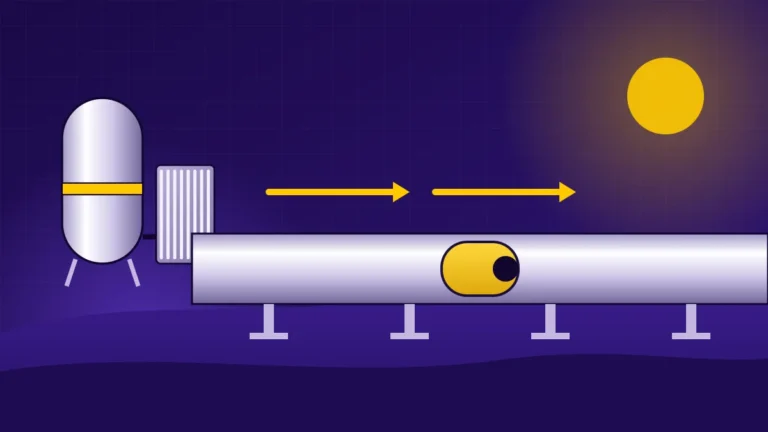
A pressure test proves that piping or a vessel is strong enough and does not leak before it goes into service. There are two main ways to do it: fill it with water (hydrostatic test, or hydrotest) or with gas, usually air or nitrogen (pneumatic test). The codes strongly prefer water, and for good reason.
The key difference: stored energy
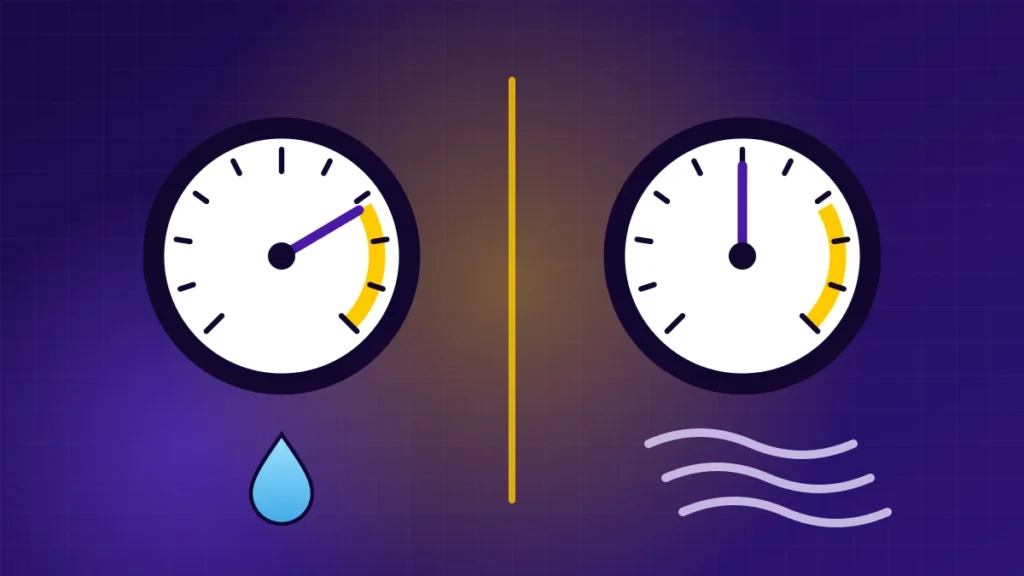
Water hardly compresses. If a pipe fails during a hydrotest, the pressure drops almost instantly and the water spills out.
Gas is highly compressible. A pressurised gas stores a great deal of energy, many times more than the same volume of water at the same pressure. If a pipe fails during a pneumatic test, that energy can be released as a blast, throwing fragments a long way. That is why pneumatic tests need much stricter controls.
Comparison
| Factor | Hydrotest | Pneumatic test |
|---|---|---|
| Test medium | Water (sometimes with additives) | Air or nitrogen |
| Typical test pressure (ASME B31.3) | 1.5 × design pressure, adjusted for temperature | 1.1 × design pressure |
| Stored energy | Low | High |
| Safety distance | Normal barriers | Larger exclusion zone, calculated |
| Weight | Water adds a lot of weight | No added weight |
| After the test | Drain, and often dry | Vent; system stays dry |
| Leak finding | Visual, at joints | Soap solution or gas detection |
| Code preference | Preferred | Only when hydrotest is not practical |
When is a pneumatic test used?
Codes such as ASME B31.3 allow a pneumatic test when a hydrotest is not practical, for example when:
- the system or its supports cannot carry the weight of water;
- water would damage the lining, catalyst or process (for example cryogenic, refrigeration or instrument air systems);
- the system cannot be dried properly afterwards;
- freezing is a risk (rare in Saudi Arabia, but relevant in some processes).
Even then, the owner usually needs to approve the pneumatic test, and the procedure must address stored energy, safe distances and brittle fracture.
Rules usually applied to pneumatic tests
- A preliminary low-pressure check for leaks before going to full pressure.
- Pressure raised in steps, with hold periods at each step.
- A calculated exclusion zone based on stored energy.
- A relief valve on the test system.
- Joints and welds often checked by extra NDT before testing.
- Inspection for leaks at a reduced pressure, not at full test pressure.
Is a leak test the same as a pneumatic test?
No. A leak test (for example with nitrogen-helium) is done at a lower pressure to find small leaks after the strength test. Read more in nitrogen purging vs drying vs leak testing.
How to choose
- Start with a hydrotest. It is the default for good reason.
- If water is truly not practical, check whether the code and owner allow pneumatic testing for that system.
- If they do, prepare a specific procedure with stored energy and safety distance calculations.
- Consider whether a hydrotest of the parts that can take water, plus a pneumatic test of the rest, is a better plan.
Frequently asked questions
Why is the pneumatic test pressure lower?
Because of the risk from stored energy. The lower pressure reduces that risk, while still proving the system with a margin over design.
Is nitrogen safer than air for pneumatic tests?
Nitrogen avoids adding oxygen to systems that will carry hydrocarbons, and it is dry. But it carries the same stored energy as air and adds an asphyxiation risk at vents.
Which test is quicker?
Pneumatic tests avoid filling, draining and drying, but their extra safety steps take time. Overall time depends on the system.
For hydrotest pressure rules by code, see hydrotest pressure and hold time. Our hydrotest services support projects in Dammam, Ras Tanura and Yanbu. Contact us.