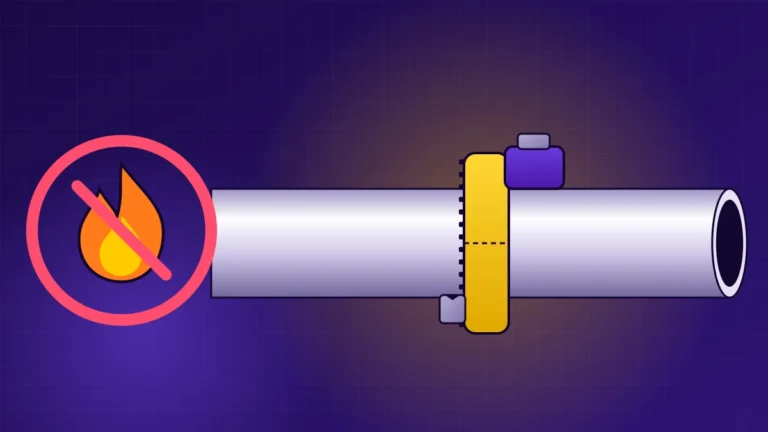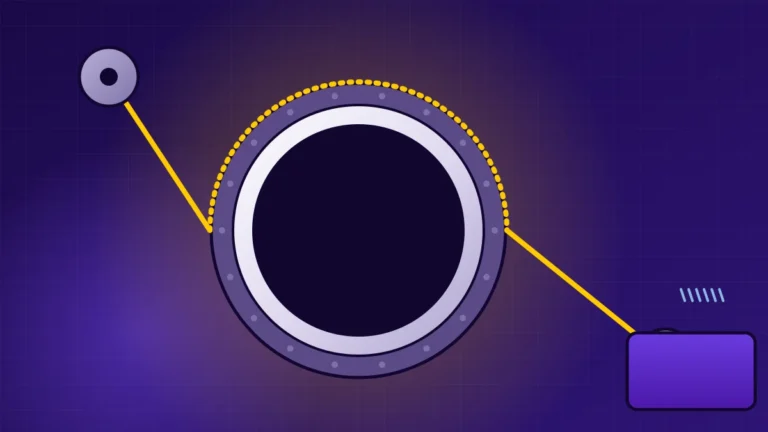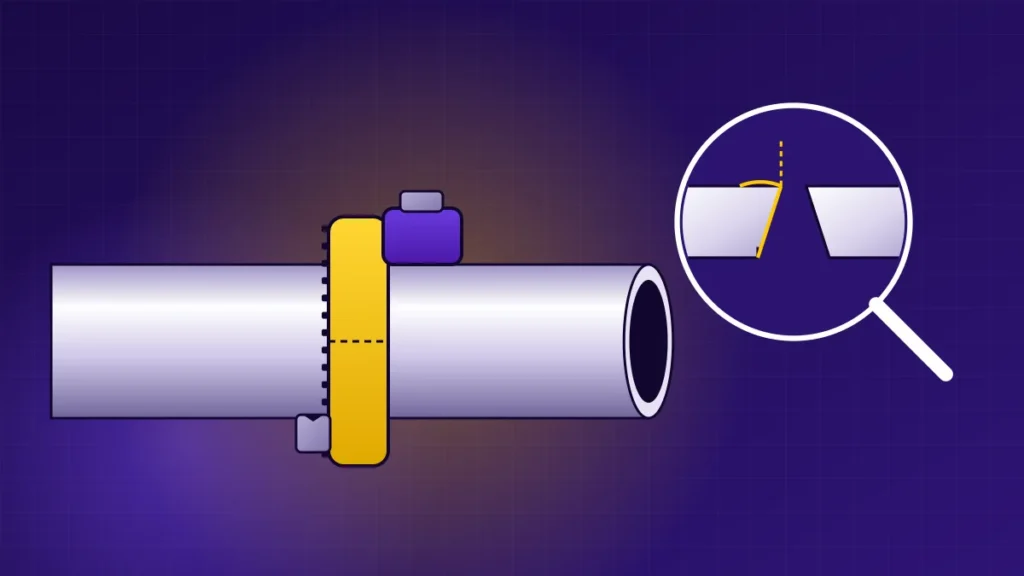
A clamshell lathe, also called a split-frame lathe, is the workhorse of on-site pipe cold cutting. It clamps around the pipe like a shell, and a rotating ring carries cutting tools around the outside. In one set-up it can cut the pipe and machine a weld bevel, with no flame and no heat-affected zone.
How a clamshell lathe works
- Mounting. The frame comes in two halves. They are placed around the pipe and bolted together.
- Centering. Adjustable feet or pads clamp the frame to the pipe and centre it. Good centering gives a square cut.
- Drive. A pneumatic, hydraulic or electric motor turns the ring gear, carrying the tool slides around the pipe.
- Cutting. A parting tool is fed in a little on each turn, until it cuts through the wall.
- Bevelling. A form tool or a second slide machines the bevel, either at the same time or straight after.
Because the frame grips the outside of the pipe, the pipe needs good support on both sides of the cut. When the cut breaks through, the pipe can move or close up on the tool, so supports and clamps are planned before the cut starts.
Common weld bevel types
| Bevel | Typical use | Notes |
|---|---|---|
| Standard V bevel (37.5°) | General butt welds in carbon and stainless pipe | The most common bevel, with a small flat land at the root (about 1.6 mm) |
| J bevel | Thick-wall pipe | Less weld metal than a V bevel on heavy walls |
| Compound bevel | Thick-wall pipe | A steep bevel at the root and a shallower one above it, to reduce weld volume |
| Counterbore | Matching inside diameters | Machines the bore so two pipes line up for a good root pass |
| Flat facing | Flange or end preparation | A square, flat end |
Your welding procedure (WPS) sets the exact bevel angle, land and root gap. The machining crew should get a copy before cutting.
What clamshell cutting is good for
- Cutting out damaged or corroded spools on a live plant.
- Tie-ins to new lines during a shutdown.
- Decommissioning, where the cut ends will be capped.
- Preparing pipe ends for welding on alloy, duplex and stainless pipe where heat would affect the metal.
For very large or odd-shaped sections, a diamond wire saw may be faster.
How to prepare for a clamshell cut
- Measure the pipe: outside diameter, wall thickness and material.
- Check clearance: the frame needs room around the pipe, often around 150–300 mm, depending on the tool.
- Plan supports on both sides of the cut.
- Drain and clean the line, and get the right permit. See our guide to cutting pipes in hazardous areas.
- Give the crew the WPS so the bevel matches.
Why not just cut with a grinder?
A grinder is fast, but it throws sparks, heats the metal and leaves an end that still needs bevelling. In a hazardous area that means a hot work permit and more risk. On alloy materials, the heat can damage the metal. A clamshell cut is slower to set up but usually faster overall when you count the bevel and the permit work. Our article on cold cutting vs hot cutting compares both.
Frequently asked questions
Can a clamshell lathe cut a pipe that is still in service?
Cutting into a pressurised line is a different operation (hot tapping). Clamshell cutting is done on lines that are isolated, depressurised and drained, even if the plant around them is still running.
How long does a cut take?
It depends on size, wall thickness and material. Set-up is often longer than the cut itself.
Can the same tool cut stainless and duplex?
Yes, with the right tooling, speeds and coolant.
We provide clamshell cutting and bevelling crews in Ras Tanura, Rabigh, Dammam and other cities. See our pipe cold cutting services or contact us.