A flange bolt torque chart is one of the most searched pieces of information in bolting. It is also one of the most misused. A torque value only means something when you know the bolt load it was meant to create and the friction it assumed. This article gives a worked chart for common stud sizes and explains how to use it safely.
Important: the values below are a worked example to show the method. They are not a procedure for any specific joint. Always use target loads approved for your flange, gasket and bolting, as described in ASME PCC-1.
The formula
Torque and bolt load are linked by:
T = K × F × D
- T = torque
- K = nut factor (depends mostly on the lubricant and surface condition)
- F = target bolt load
- D = nominal bolt diameter
The bolt load F is usually set from a target bolt stress multiplied by the stud’s tensile stress area.
Assumptions used in this chart
- Stud material ASTM A193 B7, with a yield strength of 105 ksi (724 MPa) for sizes up to 2.5 inch.
- Target bolt stress of 50% of yield (52.5 ksi, about 362 MPa).
- Nut factor K = 0.16 (typical of a good anti-seize lubricant on clean threads).
- UNC threads up to 1 inch, 8-thread series (8UN) above 1 inch, as used for ASME B16.5 flanges.
Worked torque chart: B7 studs at 50% of yield
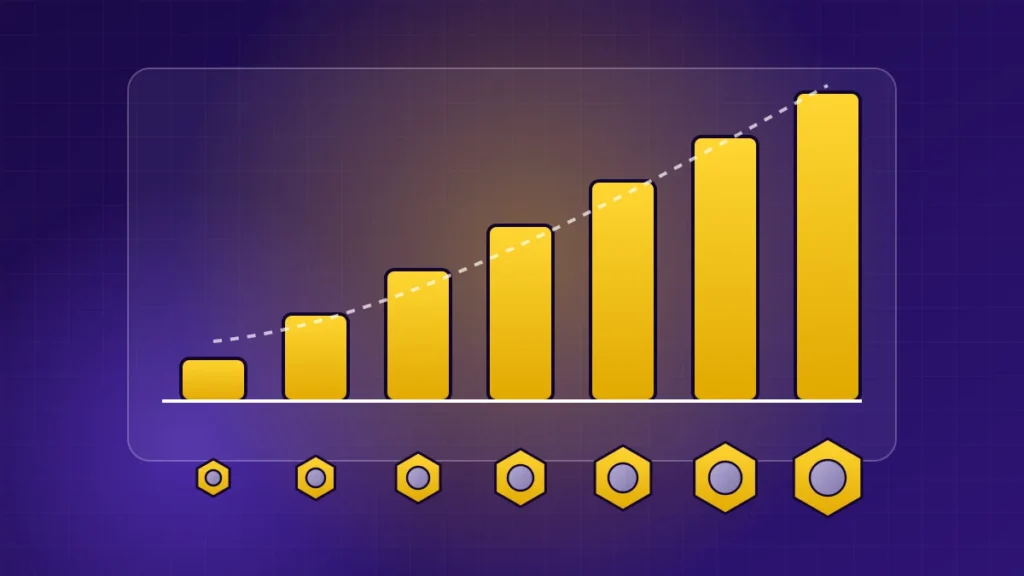
| Stud size (in) | Tensile stress area (in²) | Bolt load (kN) | Torque at K = 0.16 (N·m) | Torque at K = 0.20 (N·m) |
|---|---|---|---|---|
| 1/2 | 0.142 | 33 | 67 | 84 |
| 5/8 | 0.226 | 53 | 134 | 168 |
| 3/4 | 0.334 | 78 | 238 | 297 |
| 7/8 | 0.462 | 108 | 384 | 480 |
| 1 | 0.606 | 142 | 575 | 719 |
| 1-1/8 | 0.790 | 185 | 843 | 1,054 |
| 1-1/4 | 1.000 | 234 | 1,186 | 1,483 |
| 1-3/8 | 1.233 | 288 | 1,609 | 2,011 |
| 1-1/2 | 1.492 | 348 | 2,124 | 2,655 |
| 1-5/8 | 1.780 | 416 | 2,745 | 3,431 |
| 1-3/4 | 2.080 | 486 | 3,455 | 4,318 |
| 2 | 2.770 | 647 | 5,258 | 6,572 |
Look at the last two columns. The same bolt load needs 25% more torque when K rises from 0.16 to 0.20. Put the other way round, if your chart assumes K = 0.16 but the threads are dry and K is really 0.20, every bolt ends up with about 20% less load than you think. This is why the lubricant must always match the chart.
Which stud size does my flange use?
For ASME B16.5 weld neck flanges, common sizes are:
| Pipe size | Class 150: number × stud size | Class 300: number × stud size |
|---|---|---|
| 2 in | 4 × 5/8 | 8 × 5/8 |
| 4 in | 8 × 5/8 | 8 × 3/4 |
| 6 in | 8 × 3/4 | 12 × 3/4 |
| 8 in | 8 × 3/4 | 12 × 7/8 |
| 10 in | 12 × 7/8 | 16 × 1 |
| 12 in | 12 × 7/8 | 16 × 1-1/8 |
Check the flange drawing or the standard for other sizes and classes.
Why one value does not fit every joint
A chart gives you a starting point. The right target load for a joint also depends on:
- Gasket type. A spiral wound gasket, a sheet gasket and a ring-type joint need very different stresses to seal.
- Flange strength. Small, low-class flanges can be overstressed by loads that suit a heavy flange.
- Temperature and service. Hot, cyclic or toxic services may need a higher target and better control.
- Bolt material. B16, B8M and other materials have different strengths.
ASME PCC-1 describes how to pick a target that respects all of these limits.
From torque to pump pressure
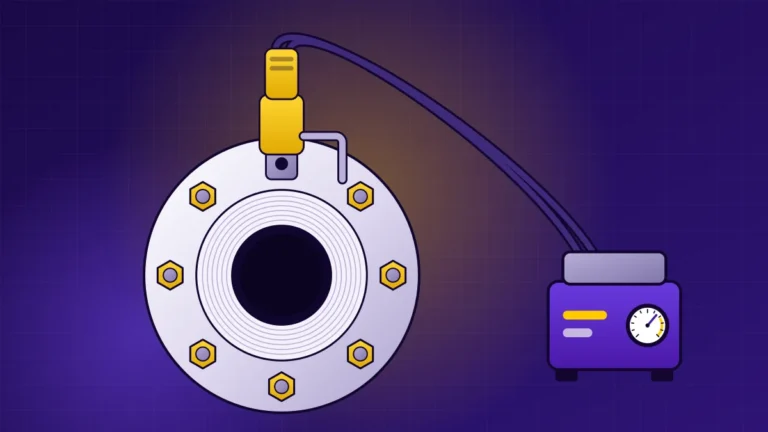
Hydraulic torque wrenches are set by pump pressure, not torque. Each wrench model has its own conversion chart from the maker. Always use the chart for the exact tool and serial number, and check the gauge calibration. Mixing up charts between wrench sizes is a common and serious mistake. Our article on hydraulic torque wrench services covers this in more detail.
Free tools: work out torque for any stud size, material and lubricant with our bolt torque calculator, or print the one-page flange bolt torque chart.
Frequently asked questions
Can I use this chart on my plant?
Use it to understand the method, not as an approved procedure. Your plant’s engineering or bolting procedure sets the target loads.
What nut factor should I use?
Use the value your lubricant maker publishes, or the one in your plant procedure. If the threads are not lubricated the same way every time, the result will not be consistent.
Is torquing accurate enough for critical joints?
For many joints, yes. For large, high-pressure or leak-prone joints, consider bolt tensioning.
Need calculated torque values and a crew to apply them? Our bolt torquing services include joint calculations, calibrated tools and full records, in cities such as Al Khobar and Rabigh. Request a quote.