Shell and tube heat exchangers are among the hardest-working items in a refinery or petrochemical plant. They are opened at almost every turnaround for cleaning and inspection, and their large flanged joints are a common source of leaks at start-up. This guide explains how heat exchanger sealing faces are repaired on site.
Which joints are involved?
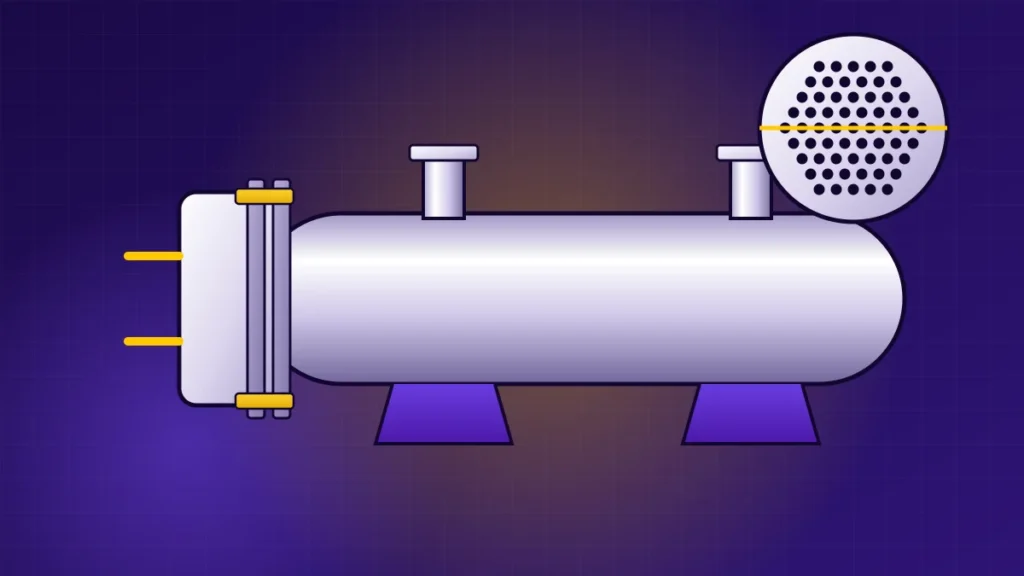
A typical shell and tube exchanger has several large joints:
- Channel cover (bonnet) to channel flange.
- Channel to tubesheet joint.
- Shell to tubesheet or girth flange joint.
- Floating head joint on floating head exchangers.
- Nozzle flanges for process connections.
Each of these has a gasket face that must be in good condition. Some also have pass partition grooves, which hold the gasket ribs that separate tube passes.
Common damage
- Corrosion and pitting, especially in cooling water service.
- Erosion at the edges of pass partitions.
- Scratches and tool marks from opening, cleaning and handling.
- Warping from uneven tightening or thermal cycles.
- Gasket burn-in from leaking joints.
How on-site facing works on exchangers
- Open and clean the joint after the bundle is removed or the cover is off.
- Inspect faces and pass partition grooves, and measure flatness.
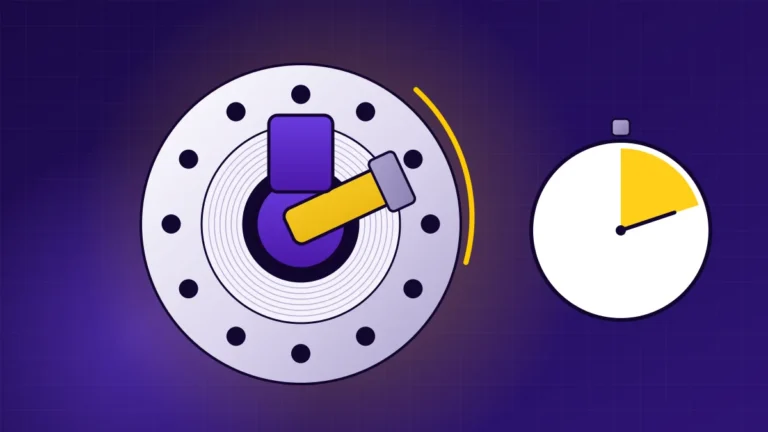
- Mount a large portable facing machine, usually on the outside diameter or with an internal mount for channels.
- Machine the gasket face to the required finish. See the flange face finish guide.
- Machine pass partition grooves if needed.
- Check finish, flatness and dimensions, and record them.
Because exchanger flanges are large, flatness is often the main issue. A face that is slightly warped can leak even with a perfect finish.
Bolting heat exchanger joints
Exchanger joints are often large-diameter and high in bolt count, and they see thermal cycling. They benefit from:
- calculated target bolt loads, not standard torques;
- bolt tensioning or multi-tool torquing for an even, parallel closure;
- careful gap measurement between flanges during tightening;
- a hot torque check, if the procedure allows, after the unit reaches temperature.
Machine or replace?
If damage is on the face and enough thickness remains, machining in place is much faster than replacing a channel or cover. If there are cracks, or previous machining has used up the allowance, weld overlay or replacement may be needed. Our article on flange facing vs replacement walks through the decision.
Planning for a turnaround
- Review leak history for each exchanger before the shutdown.
- Book facing machines early; large machines are in demand during peak turnaround seasons.
- Order gaskets after the faces are inspected, or have spares of several types on hand.
- Add exchanger joints to the joint register in your shutdown bolting checklist.
- Plan a hydrotest of the tube side or shell side after repair where required.
Frequently asked questions
Can the tubesheet face be machined in place?
Yes, with the right machine and mounting, the tubesheet gasket face can be machined without removing it from the shell.
How long does facing an exchanger flange take?
It depends on size and damage. Set-up and checks often take as long as machining. Many jobs are done within a shift.
Should I hydrotest after facing?
Your plant’s procedure decides. Many plants test exchangers after major repair before returning them to service. See hydrotest services.
We repair heat exchanger flanges in Al Jubail, Ras Tanura, Yanbu and other industrial cities. See our flange facing services or contact our team.