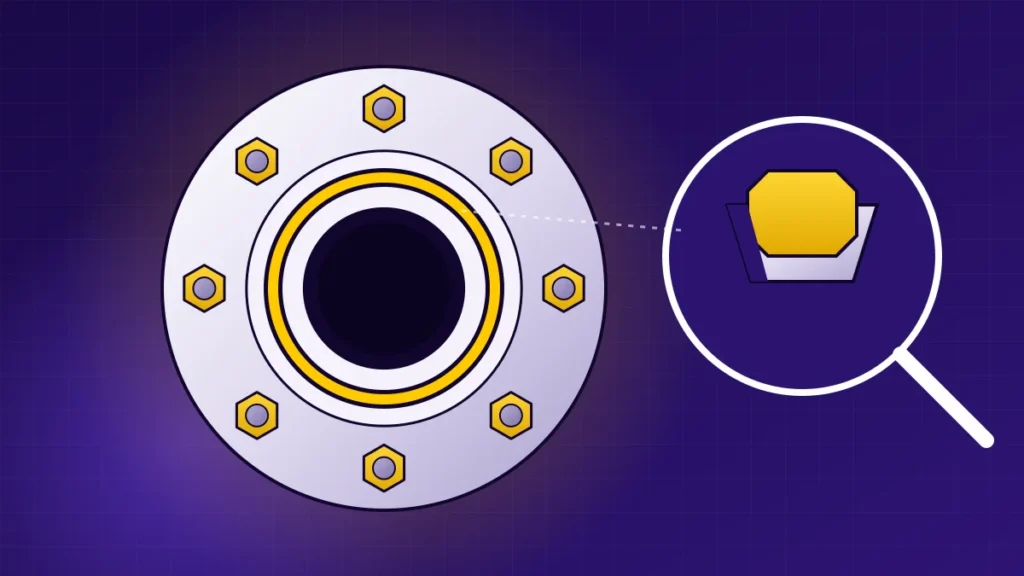
Ring-type joint (RTJ) flanges are used on high pressure and high temperature lines, wellheads and critical process equipment. Instead of a soft gasket, they use a solid metal ring that sits in a machined groove in each flange. When the bolts are tightened, the ring is pressed into the groove and seals metal to metal.
That makes the groove the most important part of the joint. If it is damaged, the joint will leak, however well the bolts are tightened.
Ring types
| Ring type | Shape | Typical use |
|---|---|---|
| R (oval or octagonal) | Simple ring, oval or octagonal section | ASME B16.5 and B16.47 flanges |
| RX | Pressure-energised, larger section | API 6B flanges and higher pressure service |
| BX | Pressure-energised, for face-to-face contact | API 6BX flanges, very high pressure |
The groove must match the ring type and size exactly.
Groove finish and hardness
- The groove side walls, where the ring seals, are typically machined to 1.6 µm (63 µin) Ra or smoother.
- The groove walls are at a set angle (23° for standard R, RX and BX grooves).
- The ring must be softer than the groove, so the ring deforms and the groove does not. Ring materials such as soft iron, low carbon steel, 4–6% chrome and stainless steel are chosen with this in mind.
Using a ring that is as hard as or harder than the groove can damage the groove on the first tightening.
Signs that a groove needs repair
- Scratches or dents on the sealing walls, often from handling or from the old ring.
- Corrosion or pitting in the groove, especially where water collected.
- Ring imprint: a worn band where the ring has been compressed many times.
- Groove widened or deepened after many ring changes.
- Leaks that come back after the ring is replaced.
How on-site RTJ groove machining works
- Measure the groove: width, depth, angle and pitch diameter, and compare with the standard.
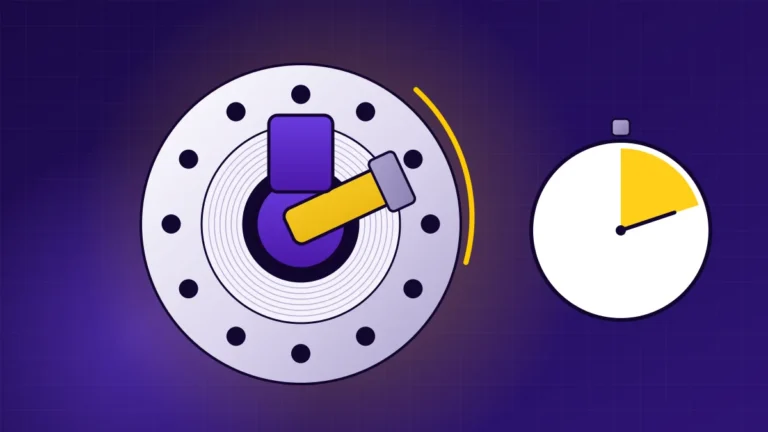
- Mount a portable flange facing machine with an RTJ tool head.
- Machine the walls to remove the damage, keeping the correct angle.
- Check the finish and dimensions with gauges and a profilometer.
- Record the new dimensions. If the groove is now oversized, an oversized ring or a weld-overlay repair may be needed.
When damage is too deep to machine out, the groove can be weld overlaid (often with an alloy such as Inconel) and then re-machined. This is a bigger job, with welding procedures and inspection.
Tightening RTJ joints
RTJ joints need a high and even bolt load to seat the ring. Good practice includes:
- checking that the ring and groove are clean and undamaged before assembly;
- using the correct lubricant and target load;
- following a controlled pattern, as in ASME PCC-1;
- never reusing a ring.
Frequently asked questions
Can I reuse an RTJ ring?
No. Once a ring has been compressed it has deformed to fit that groove. A new ring is needed every time the joint is opened.
How do I know if the groove is oversized?
Measure it against the standard dimensions for that ring number. Groove gauges make this quick on site.
Is RTJ groove machining the same as face machining?
The machine is often the same, but the tooling and checks are different. See our flange face finish guide for raised face finishes.
Our flange facing services include RTJ groove machining in Abqaiq, Haradh, Al Ahsa and other oil and gas areas. If you are unsure whether to machine or replace, see flange facing vs replacement or contact us.